Art as a self-knowledge tool has nothing to do with producing something beautiful. It's about the process. About what happens inside you while you create, while you observe, while you choose one color and discard another without knowing why.
Every aesthetic decision you make — conscious or not — is a data point about your inner world. And if you learn to read that data, art becomes one of the most honest diagnostic systems that exist. Because your mind can lie to you. Your body can disguise things. But what you create when you stop controlling speaks without a filter.
Why Art Reaches Where Words Can't
When someone asks you "how do you feel?", your mind builds a reasonable answer. It filters, edits, presents a manageable version. It's automatic — it's not dishonesty, it's the Ego doing its job of protecting the image you have of yourself.
Art bypasses that filter. When you paint, sculpt, compose, or even when you observe a symbolic image with intention, you're operating from a different channel than the verbal one. Images don't go through reason's customs control. That's why a dream can leave you shaking even though it "makes no sense" — the image reached your limbic system directly without the Ego being able to edit it.
Jung and active imagination
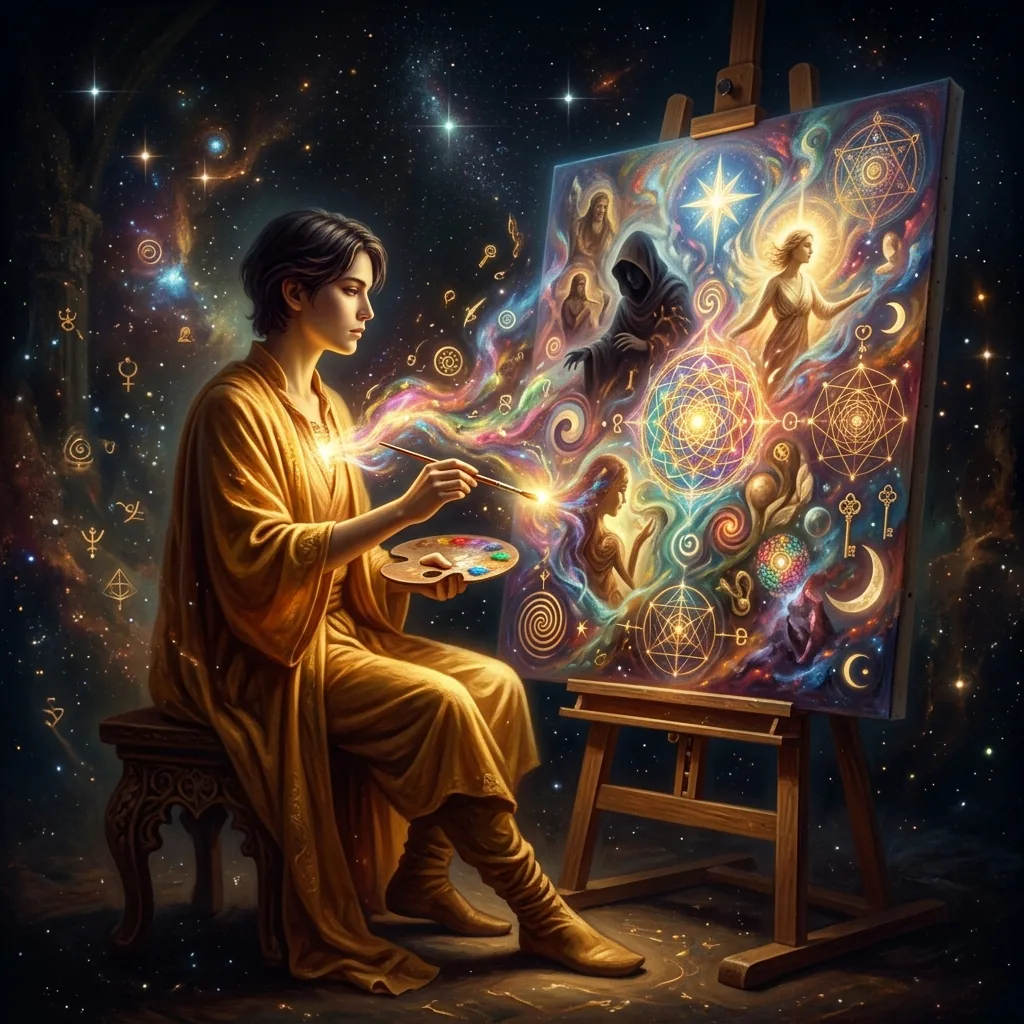
Jung understood this before neuroscience confirmed it. He used what he called active imagination: he asked his patients to draw, paint mandalas, sculpt figures with clay. Not to make "pretty art" but to give visible form to unconscious content. A depressed patient's mandala doesn't look like one from someone in a moment of expansion — even though neither of them can verbally explain the difference.
Form speaks. Color speaks. Composition speaks. You just need to learn to listen.
Symbolic Art vs. Art Therapy: An Important Distinction
Art therapy is a clinical discipline where a mental health professional uses the creative process as a therapeutic resource within a clinical framework. It has its own protocols, training, and regulatory structure.
What I do is something different: symbolic art as an inner reading system. I don't work from a clinical framework but from a symbolic one. The difference lies in the premise: art therapy starts from a diagnosis and uses art as a treatment complement. Symbolic art starts from the image and uses your reaction to it as a mirror of your internal structure.
You don't need to have a problem to benefit from symbolic art. You need the curiosity to see yourself. And you need an image powerful enough to activate layers that everyday conversation doesn't touch.
Three Ways Art Works as a Mirror
Creating: What You Make Speaks About You
When you create something — anything, from a doodle to a collage, from a photo to a text — you're externalizing internal content. You're pulling something out from inside, giving it shape, volume, color.
What's revealing isn't the result but the decisions you made to get there. Why did you choose that color and not another? Why did that shape feel "right"? Why did you feel the need to fill the entire space or leave large voids? Each of those micro-decisions is a signature of your inner state.
You don't need to be an artist. Try this exercise: grab paper and colors, set a 10-minute timer, and draw whatever comes up first. Then look at what you made as if it belonged to someone else. What do you see? What feeling does it generate? Which part do you like and which one makes you uncomfortable? The answers are information.
Observing: What You See Tells Who You Are
You don't need to create to use art as a mirror. Observing with intention is equally powerful.
When you look at a symbolic image and something stirs inside — attraction, rejection, nostalgia, unease, calm — that reaction is pure projection. You're not seeing "what the image means." You're seeing what the image activates in your psychic structure. Two people look at the same card and see completely different things. The difference isn't in the card — it's in them.
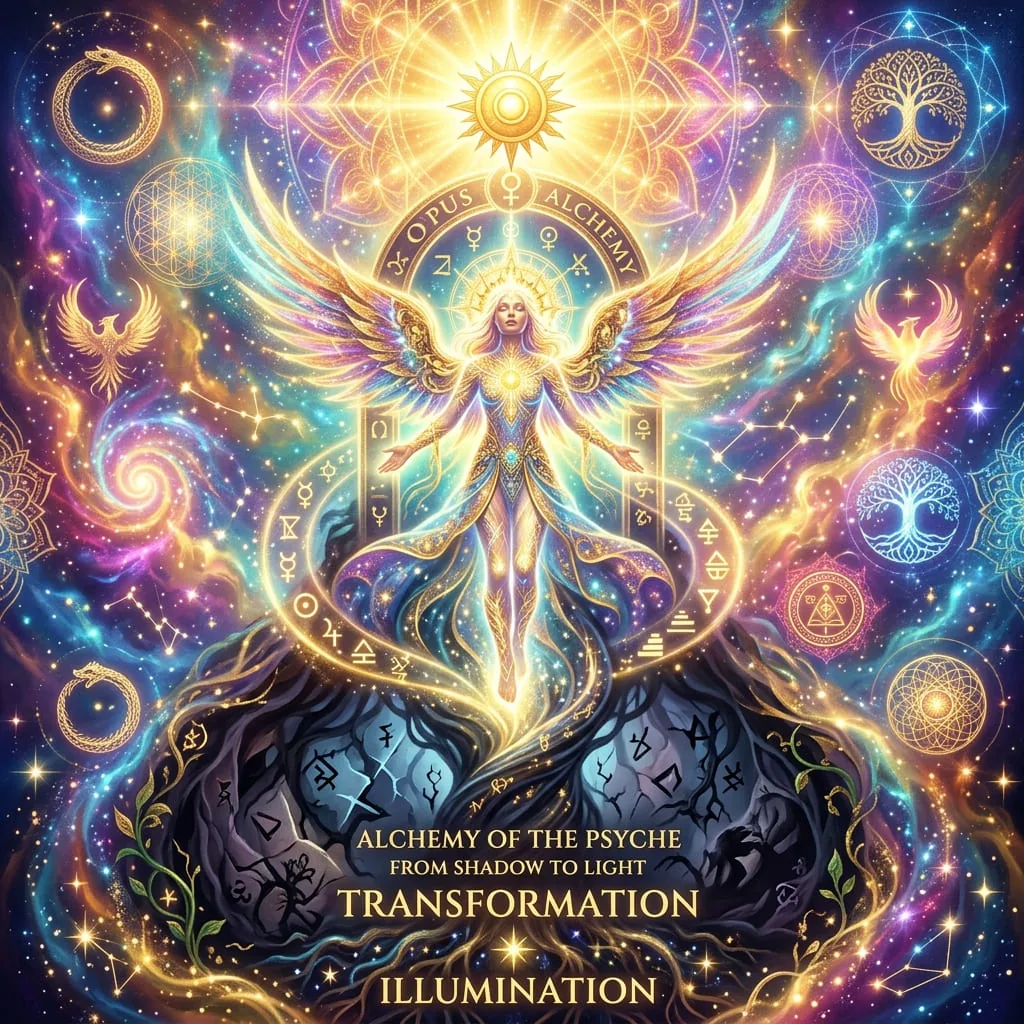
This is the principle at work in the 33 cards of the Trazado Álmico. Each image was designed with layers of symbolism — alchemical, archetypal, numerological — that function as triggers. The Magician (card N°28) doesn't tell you "you're a magician." It confronts you with your ability to transform your reality and asks whether you're using it or keeping it dormant. The Flow (card N°18) doesn't tell you "let go." It shows you an image of movement and you feel — in your body, not your mind — whether you're flowing or stuck.
Decoding: Reading the Symbols of Your Own Life
The third level is the deepest: learning to read symbolically what you're already living. Your home, your clothes, the objects you keep, the colors you choose, the images that catch your eye on social media — all of that is a symbolic text speaking about your inner world.
Why do you keep things you don't use? What does that full space or that empty space say about you? Why did that Instagram image stop you three seconds longer than the others? These aren't trivial questions. They're the same material that symbolic art works with, only applied to the aesthetics of your everyday life.
When you start looking at your life as a composition — with its lights, its shadows, its voids, and its saturations — you begin to read it from a different place. Not from the mental narrative ("my life is fine" or "my life is a mess") but from the visual reading of what you're creating with your daily decisions.
"Your way of creating is your way of living. Art shows you that in a safe space, at a reduced scale, where the consequences of getting it wrong are an ugly drawing and not an irreversible life decision."
The Creative Process as a Training Ground
There's something that art teaches and no book can: tolerating uncertainty.
When you start a piece — or any creative process — you don't know how it's going to end. You can have an idea, a sketch, an intention. But the material resists you, the result surprises you, and at some point you have to decide between forcing your original plan or following what the work is asking of you.
That moment is identical to what you experience in real life when things don't go as planned. Do you force it? Do you let go? Do you destroy what you've done and start over? Do you integrate the "mistake" and turn it into part of the work?
The Awakening (card N°11) works exactly this zone: the moment when you stop repeating other people's formulas and start creating from your own light. The Tides (card N°20) confronts you with the cycles of your process — what rises and what falls, what arrives and what retreats. And The Temple (card N°25) represents the sacred inner space where the act of creating becomes an act of knowledge.
Digital Art and Symbolism: The Intersection Where I Work
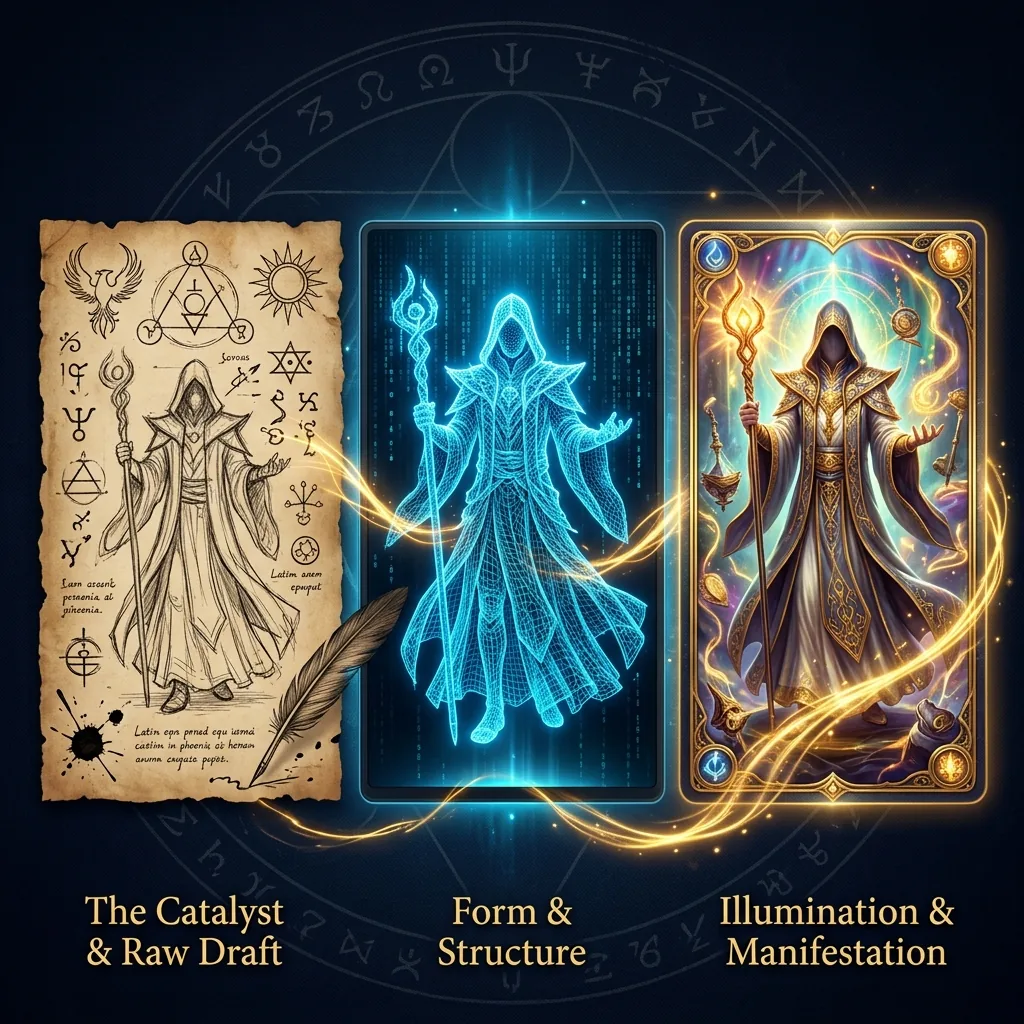
My 28-year journey crosses two worlds that most people see as separate: technology and symbolic art. I work with Blender, ZBrush, Unreal Engine — digital creation tools that allow me to build images with a symbolic precision that traditional art makes difficult.
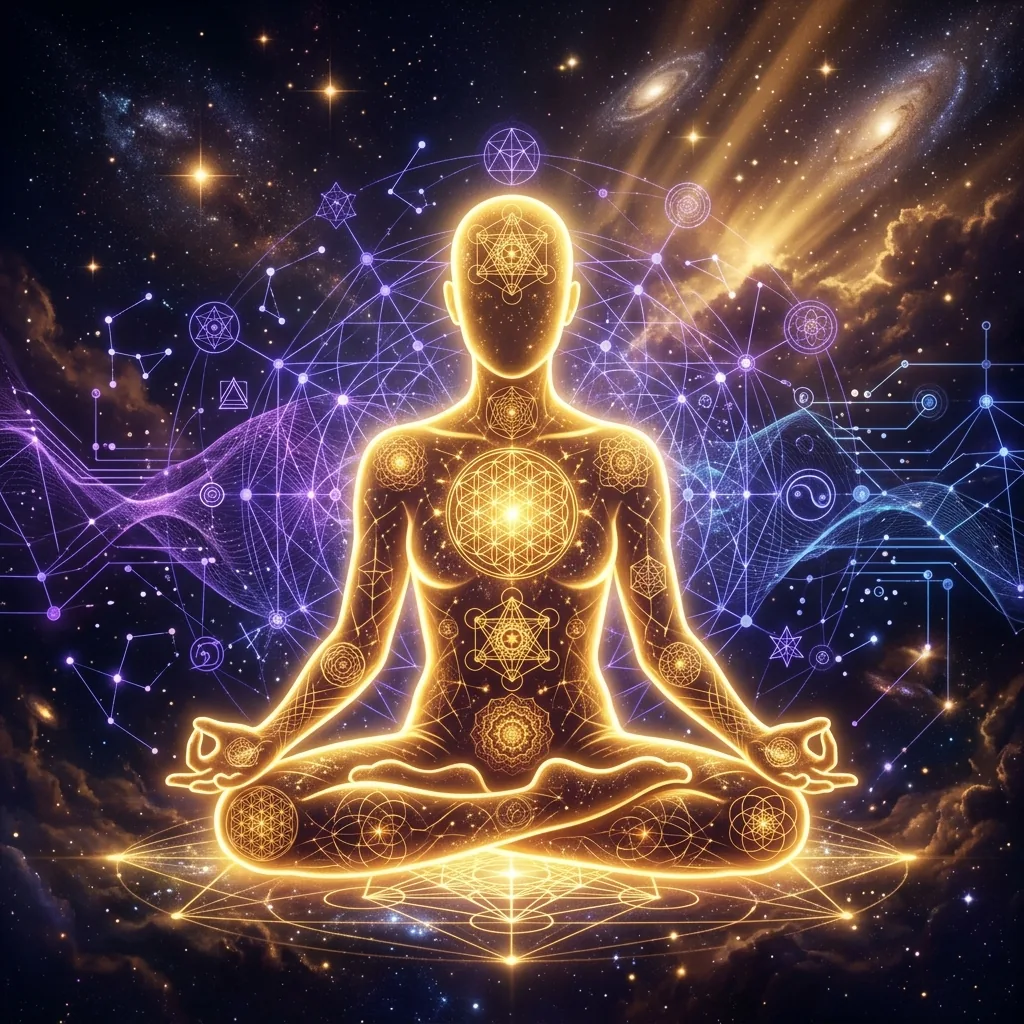
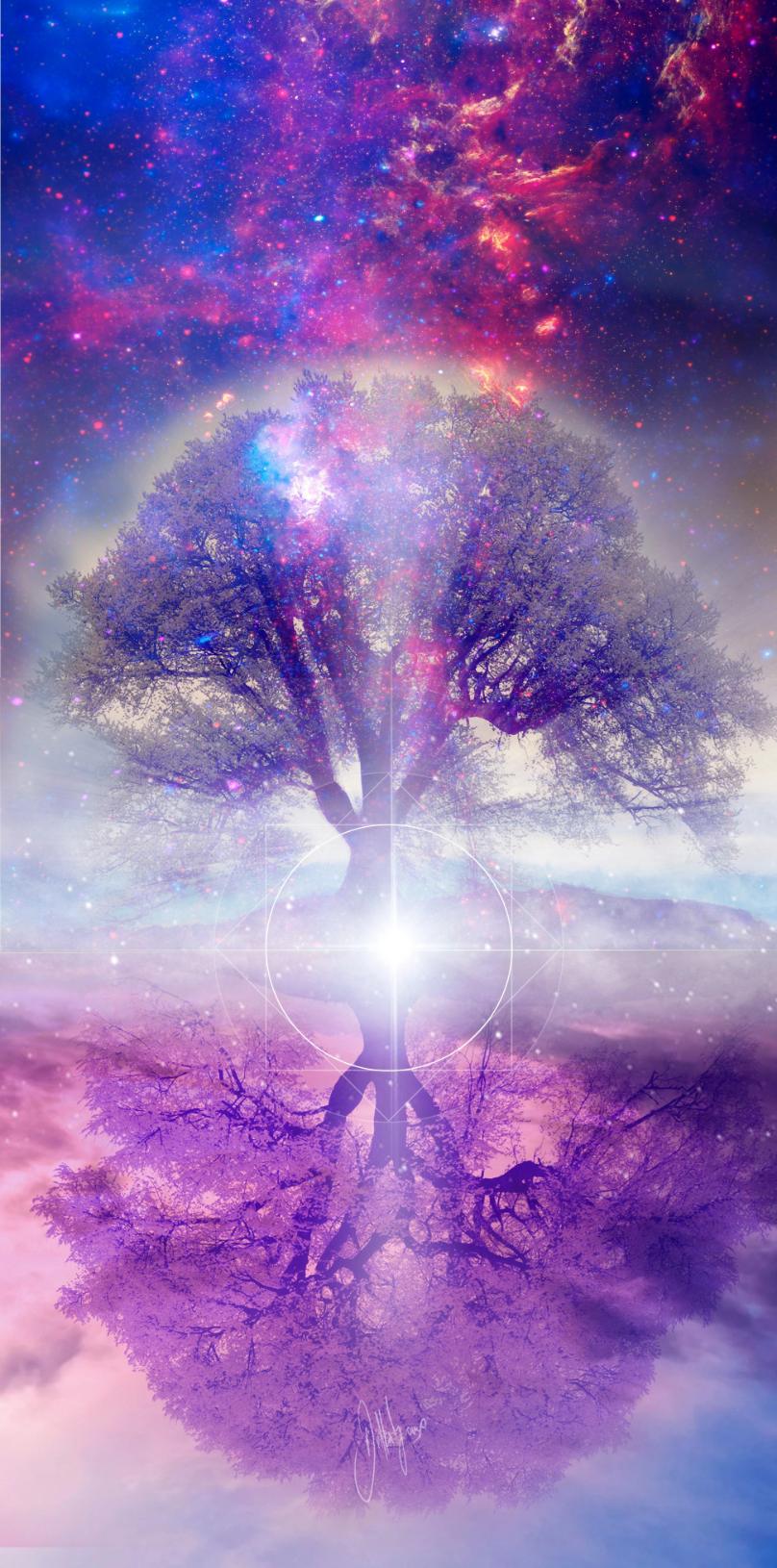
Every render I create isn't decorative illustration. It's symbolic engineering. The position of a figure, the direction of light, the relationship between elements, the color palette — everything is designed to activate something specific in the observer. It's art with the intention of a mirror, not a showcase.
This intersection between technology, art, and symbolism is also the foundation of the Art-Mirror program: a 4-stage process where we use symbolic creation as a self-knowledge tool. You won't learn to draw — you'll learn to read yourself through what you create and what you observe. It's training to recover the ability to see yourself without intermediaries.
Art Doesn't Heal You — It Shows You
The idea that "art heals" is seductive but dangerous if taken literally. Art doesn't cure depression, doesn't resolve trauma, doesn't replace professional treatment when you need it.
What it does is show you. It puts you face to face with internal material that would otherwise remain invisible. And that, over time and with the willingness to do something with what you see, is profoundly transformative. But the transformation isn't done by the work — it's done by you when you decide to look at what the work reflects back and act accordingly.
Art is the mirror. The decision to look is yours. And what you do with what you see is also yours.
Frequently Asked Questions about Art and Self-Knowledge
It's the use of images, visual creation, and symbols as a mirror of the inner world. It requires no artistic talent: what matters is the process and paying attention to what appears while you create or observe. Every aesthetic decision is information about your psychic structure.
Art therapy is a clinical discipline with a therapeutic framework and prior diagnosis. Symbolic art starts from the image and uses your reaction to it as a mirror of your internal structure — from a symbolic, not clinical, framework. You don't need a problem to benefit: you just need the curiosity to see yourself.
You don't need to know how to draw. You can create (doodles, collages, choosing colors spontaneously), observe symbolic images and record your reactions, or symbolically read the objects and spaces of your everyday life. The decisions you make — what color, what shape, what to leave empty — are data points about your inner world.
Exercise: 10 minutes, a paper and the truth
Grab paper and colors. Set a 10-minute timer. Draw whatever comes up first — without an aesthetic goal, without erasing, without judging. Use the colors that appear on their own.
When you finish, don't analyze it with your mind right away. Observe it. Notice which figure occupies the center and which remains at the periphery. Notice which colors dominate and which are absent. Notice if you filled the space or left large voids.
Look at what you made as if it belonged to someone else. What do you see? What feeling does it generate? Which part do you like and which one makes you uncomfortable? The answers are information. There is no wrong answer.
If you want to explore your inner structure through symbolic art — using image observation and creation as tools for internal reading — the Art-Mirror program is a space designed for that. Four stages to take back the joystick of your visual narrative.
And if you prefer to start on your own, the 33 cards of the Trazado Álmico are images designed exactly for this: to activate what you need to see. Choose one, observe it, write down what comes up. That's the first stroke.